
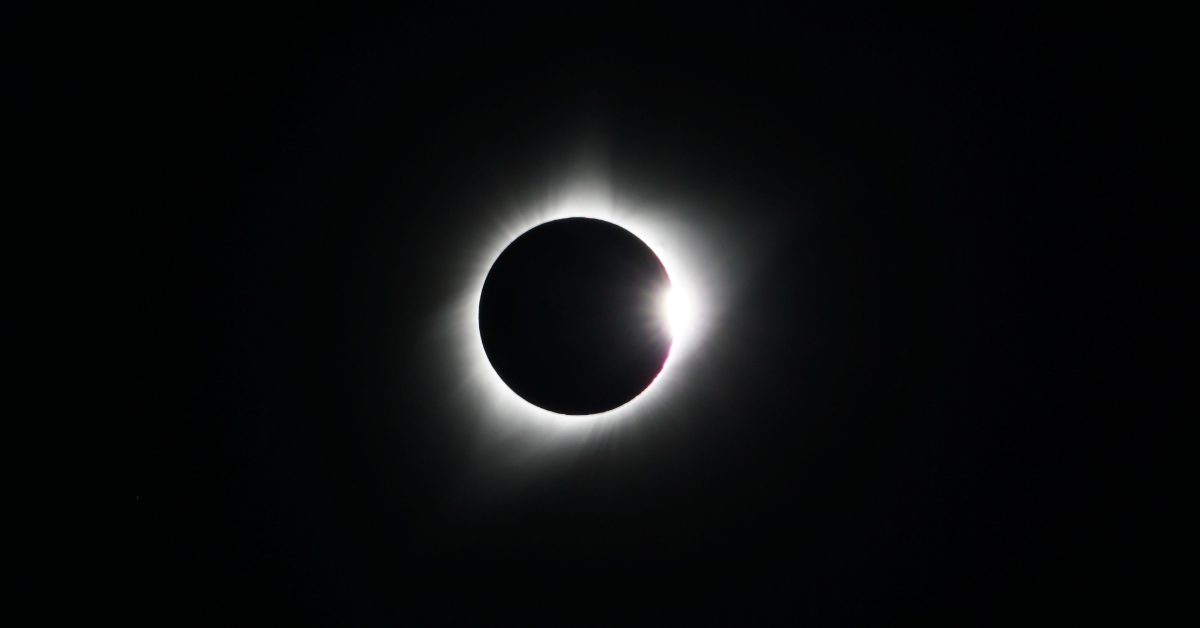
Tonight, the UK will ground to a halt to witness one of nature's most spectacular events, a solar eclipse. For a few extraordinary minutes, daylight will fade, temperatures will drop and the world will take on an eerie, twilight quality. For most, it will be a moment of wonder. For us, as LED lighting specialists, it is a fascinating reminder of just how profoundly, light shapes everything around us.
A Sudden Shift That Your Body Notices
The human body is remarkably sensitive to changes in light. As we explored in our recent piece on circadian rhythms, your internal clock is governed almost entirely by light cues. An out of schedule drop in light, like an eclipse, sends a conflicting signal to the brain. The Suprachiasmatic Nucleus, the part of the brain responsible for regulating your body clock, receives what it interprets as an unexpected onset of evening. Melatonin production can begin to stir; alertness dips and the body momentarily does not quite know how to process the change. It passes quickly, but it is a powerful demonstration of how dependent we are on light to function, and how sensitive that system really is.
If you missed our Circadian Rhythm blog, click here to read.
The Science of Colour Temperature, Made Visible
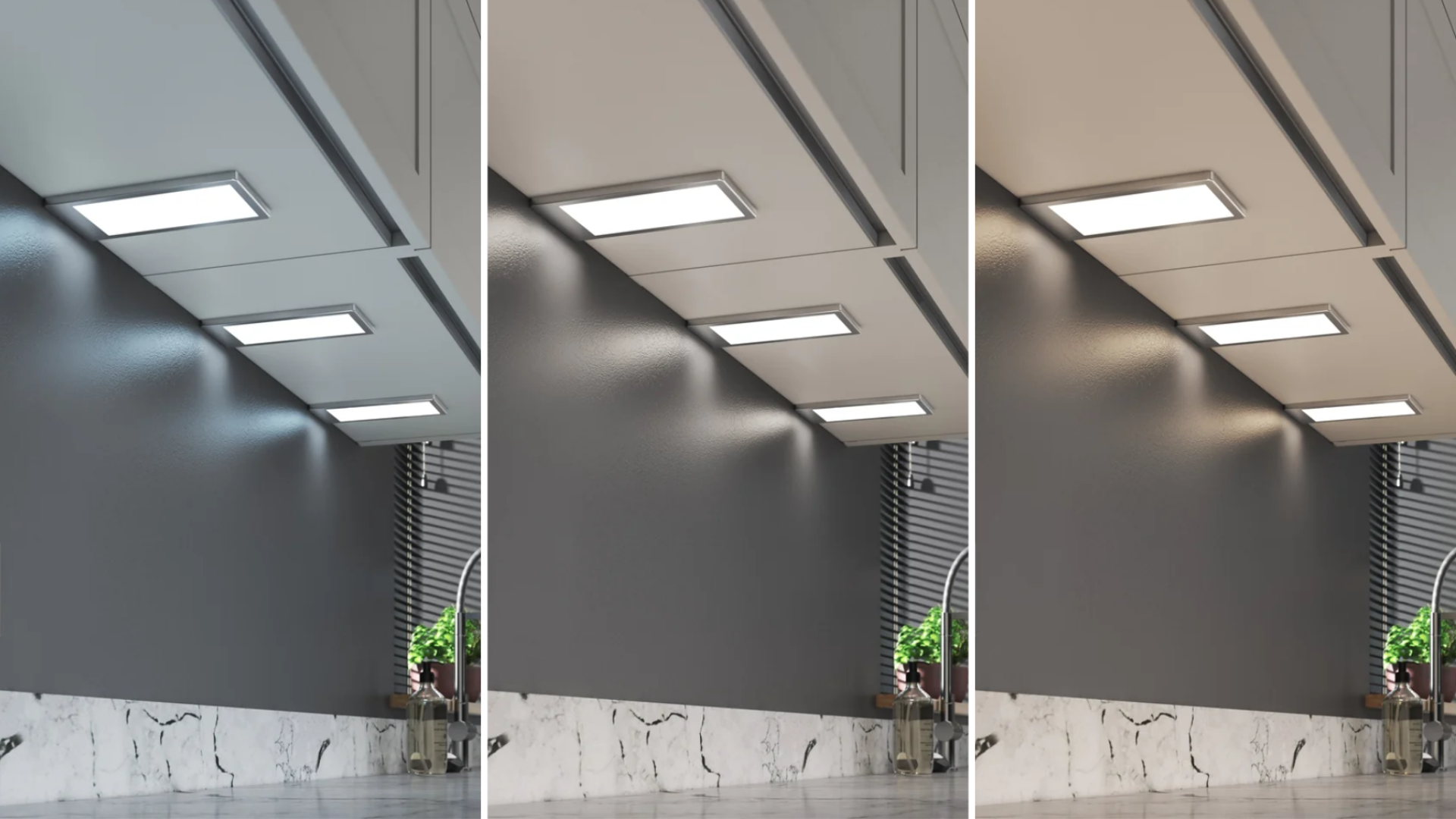
One of the most striking things about an eclipse is not the loss of brightness alone, but the change in the quality of the light. The sunlight gives way to something cooler, more diffused and distinctly unsettling. It's much the same shift we use in our correlated colour temperature (CCT) technology, ranging from 2700K to 6000K. At 4000K we get a natural white that closely mimics daylight; during the eclipse this move up towards 5000K where cooler, bluer tones take over and the lumens dim. As the eclipse passes, the lumens increase and the colour temperature travels back down that scale towards natural white.
This is something we work with every day. Colour temperature is not just a technical specification on a data sheet, but has a real and measurable effect on how a space feels and how the people in it feel. The eclipse makes that tangible in a way that no product demonstration ever could.

When Natural Light Disappears, Good Artificial Lighting Steps In
An eclipse also serves as a practical reminder of what happens when natural light is no longer present. Kitchens, bathrooms and workspaces that rely heavily on natural light can shift from bright and functional to dim and difficult in a matter of minutes.
Well-designed artificial lighting, whether that is under-cabinet LED strips in a kitchen or mirror lighting in a bathroom, is not just a finishing touch. It is what keeps a space usable, comfortable and safe when the conditions outside change.
For specifiers and designers, this is worth keeping front of mind. The best lighting schemes account for the full range of natural light conditions a space will experience throughout the day and across the seasons, not just the ideal scenario on a bright summer afternoon.
A Moment of Awe with a Practical Lesson
Solar eclipses are rare. The conditions that disrupt our lighting every day like overcast skies, short winter days, north-facing rooms are not. The same principles apply, just on a more modest scale. Light matters. The quality of it, the colour of it, the timing of it and the way it interacts with the spaces and people around it. All of it has an impact that goes far beyond aesthetics.
Tonight, will be a brilliant reminder of that. And if it prompts even one conversation about how lighting can be done better in the home, then the eclipse has done us a favour.